
At the Global Food Production and Technology Conference 2026, organised by the Ministry of Food Technology and Sovereignty, CAfPRA’s Executive Director, Dr. Segun Adebayo, presented a systems view of agribusiness.
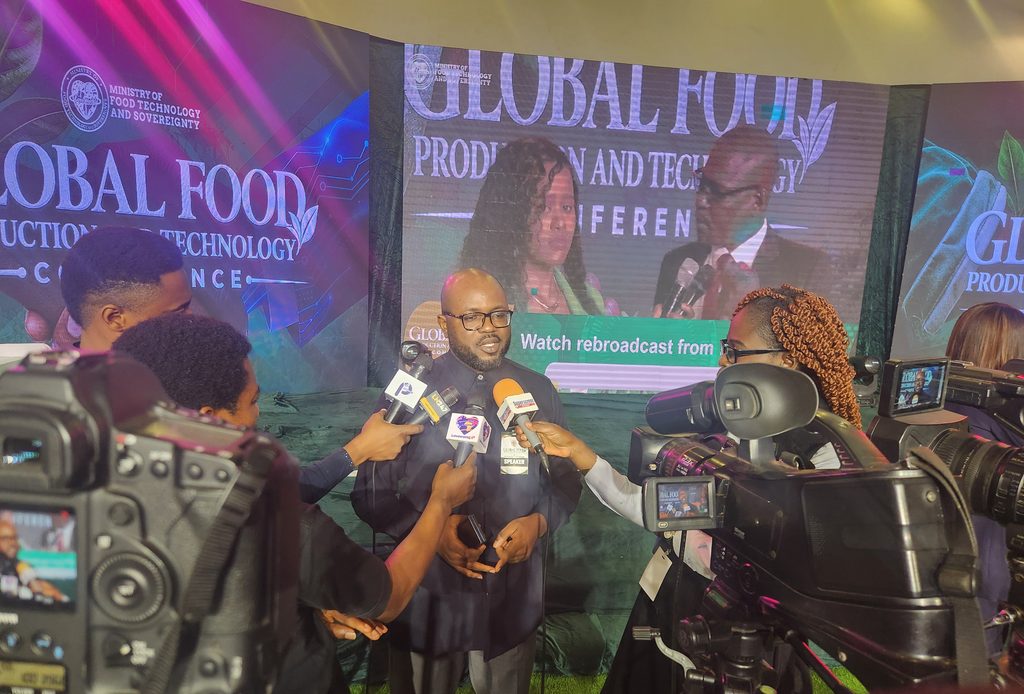
We believe Africa’s food challenges cannot be solved by focusing on farmers alone. Production is critical, but it is only one part of a larger ecosystem. Dr. Adebayo outlined ten interconnected components that together form a functional agribusiness system:
- Input providers: These are suppliers of seeds, tools, and other production resources.
- Capital providers: They are financiers who make investment possible; we are talking about loans, grants, and funding in general.
- Producers: They are farmers, livestock keepers, and fishers, e.t.c.
- Researchers: Those who generate knowledge, improved varieties, and innovation.
- Storage managers: These actors reduce post-harvest losses by creating systems that help in preservation.
- Processors: Those who add value to raw produce by converting the raw commodities to their various variants.
- Logistics & Transportation: These are systems set up to move food efficiently from one place to another.
- Distributors: They are Intermediaries that connect supply to markets as well as sellers to buyers.
- Marketers: Those who create the demand and stimulate the supply.
- Consumers: The final drivers of the entire chain (Everyone falls into this category).
At CAfPRA, we believe that Africa’s food systems remain fragile because many of these components are underdeveloped or poorly linked. Strengthening production without corresponding investment in storage, processing, logistics, and markets leaves farmers exposed and limits the continent’s ability to build real food sovereignty.
A resilient African food system requires deliberate policy attention and investment across the full value chain, not fragmented interventions. This is the approach we continue to advance in our research and policy engagement.
To get the full presentation, CLICK TO WATCH THE ADDRESS