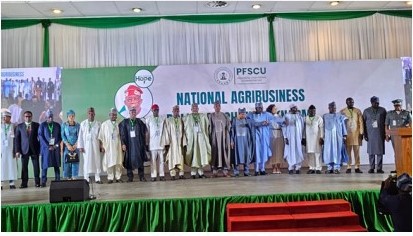
As we marked the World Food Day, stakeholders gathered at the National Assembly in Abuja to confront a hard truth: having food on the table is not the same as controlling how that food is produced. The Centre for African Policy Research and Advisory (CAfPRA), working in partnership with the Centre for Food Safety and Agricultural Research (CEFSAR) and the Loveworld Ministry of Food Technology and Sovereignty, used the occasion to press for a decisive shift toward food sovereignty rooted in local seed systems, regenerative agriculture, and robust legislative oversight.
Food availability without seed control is a fragile achievement. A nation that relies heavily on imported seeds, especially varieties that cannot be saved and replanted, remains vulnerable to supply-chain disruptions, price shocks, and external policy decisions. True resilience begins with the ability of Nigerian farmers to produce, preserve, and replant seeds adapted to local conditions. CAfPRA therefore calls for sustained public and private investment in indigenous and regenerative seed systems that restore farmers’ autonomy and strengthen national food security.
Equally urgent is the need to move beyond yield-at-all-costs metrics. Agricultural success must also be measured by soil health, environmental sustainability and the long-term safety of what reaches Nigerian plates. Excessive dependence on synthetic pesticides and other agrochemicals carries documented risks to human health, biodiversity and the productivity of our soils. We advocate accelerated adoption of organic and agroecological practices, supported by research, extension services and market incentives that make safer alternatives viable for smallholder farmers.
Household and community production must form part of the solution. The “Let’s Go Planting” initiative is not a slogan; it is a practical invitation to families, schools and neighbourhoods to cultivate vegetables, fruits and other nutritious crops in available spaces. When millions of Nigerians grow even a portion of what they consume, pressure on commercial supply chains eases, nutrition improves, and a culture of food responsibility takes root. Food production cannot remain the exclusive domain of large-scale operators.
On the regulatory front, CAfPRA reiterates the need for careful legislative scrutiny of genetically modified organisms. Concerns raised around the National Biosafety Management Agency (NBMA) Act, potential conflicts of interest between promoters and regulators of agricultural biotechnology, and the incomplete follow-through on earlier parliamentary motions require transparent review. Public confidence in the food system depends on clear, independent risk assessment, meaningful public participation and the prioritisation of national interest over commercial pressure.
Progress is already visible on the nutrition policy front. The establishment of nutrition and food security committees in 32 states and the formation of the National Legislative Network on Nutrition and Food Security demonstrate institutional seriousness. Bills addressing the registration of nutrition professionals, adulterated edible oils, extended maternity leave, and broader national nutrition frameworks deserve accelerated passage and effective oversight. Rising inflation continues to squeeze household purchasing power; legislative and budgetary action must therefore protect the most vulnerable while safeguarding local food systems from the aggressive marketing of ultra-processed products.
CAfPRA’s position is straightforward. Nigeria will not achieve lasting food security by outsourcing the foundation of its agriculture. We must invest in seeds that belong to our farmers, practices that protect our soils and people, household and community production that reduces vulnerability, and laws that place public health and sovereignty above short-term commercial interests. The conversations of World Food Day must now translate into coordinated policy, financing and citizen action.
The seed is the beginning. Control over it is the measure of our independence. CAfPRA stands ready to work with legislators, researchers, farmers, civil society and the private sector to turn this principle into durable national practice.